





Turkey is one of those rare destinations that can legitimately claim to have everything: ancient ruins that predate Rome, landscapes that look like science fiction, a coastline that stretches for thousands of kilometres, and a food culture so rich it took UNESCO three separate decisions to fully recognize it. The problem if you can call it that is deciding where to go with a limited amount of time.
Seven days is the sweet spot for a first visit. It’s long enough to go beyond Istanbul and experience the sheer geographical diversity of the country, but tight enough that you need a clear plan. This itinerary covers the best of Turkey’s unmissable destinations: Istanbul, Cappadocia, Pamukkale, Ephesus, and a final day back in Istanbul at a slower pace. Follow it in order, book key experiences in advance, and you’ll return home having seen more of Turkey in a week than most visitors manage in two.
7-Day Itinerary at a Glance
| Day | Destination | Highlight | Book In Advance |
| 1–3 | Istanbul | Old City, Bosphorus | Istanbul Tours |
| 4 | Cappadocia | Fairy chimneys, hot air balloon | Cappadocia Tours |
| 5 | Pamukkale | Travertine terraces, Hierapolis | Pamukkale Tours |
| 6 | Ephesus | Ancient Roman city ruins | Ephesus Tours |
| 7 | Istanbul — Princes Islands | Island escape, wooden mansions | Princes Islands Tour |
Days 1–3: Istanbul — The City That Rewrites Your Sense of History
Three days in Istanbul sounds generous. After the first day, you’ll realize it barely scratches the surface — and that’s fine. The goal isn’t to see everything. It’s to understand why people become obsessed with this city and keep returning.
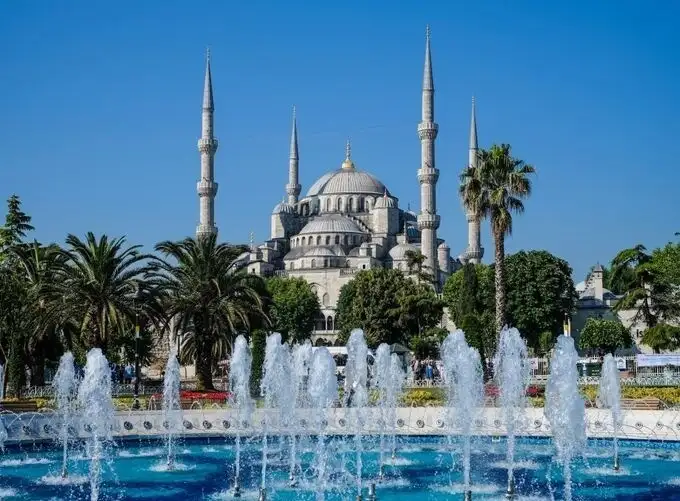
Day 1: Istanbul Old City Tour (Sultanahmet)
Land, get your Istanbul private airport transfer sorted, check in, and give yourself the afternoon to walk Sultanahmet. Don’t rush into museums on your first evening — just walk. The Hippodrome, the exterior of the Blue Mosque, the narrow streets leading down toward the waterfront. Istanbul disorients you in the best possible way, and the best cure is simply moving through it.

Day 2: Istanbul Private Tour Guide
This is the day to do it properly. Book one of the Istanbul Old City Tours and let an expert guide walk you through the Hagia Sophia, Topkapi Palace, the Basilica Cistern, and the Grand Bazaar with proper historical context. These are not just attractions — they’re the physical remnants of two of history’s great empires, Byzantine and Ottoman, layered on top of each other. The difference between walking through them with a guide and without is the difference between reading a transcript and watching a film.
Pro tip: Book skip-the-line access for the Hagia Sophia and Topkapi Palace. During peak season (April–June, September–October), queues can add two hours to your day. That’s two hours you could spend eating köfte in a side street instead.
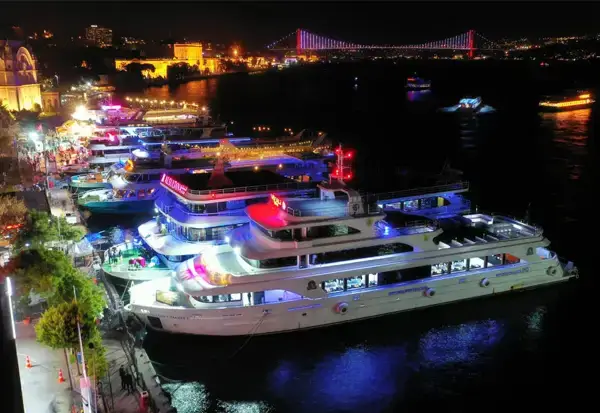
Day 3: The Bosphorus
No trip to Istanbul is complete without spending time on the water. The Bosphorus is the reason the city exists — a 31-kilometre strait connecting the Black Sea to the Marmara, dividing two continents, carrying more ship traffic than the Suez and Panama canals combined. From the deck of a boat, the city rearranges itself: you see the Ottoman waterfront palaces, the two great suspension bridges, the wooden yalı mansions on the Asian shore, and the scale of the hills and minarets in a way that’s simply impossible from street level. Book the Istanbul Bosphorus Tour by Boat for the daytime, or if you want to combine sightseeing with dinner and a traditional Turkish night show, the Bosphorus Dinner Cruise is an excellent evening option.

Day 4: Cappadocia — The Landscape That Doesn’t Look Real
Take a short domestic flight from Istanbul to Kayseri (about 1.5 hours) and you’ll find yourself in one of the most visually extraordinary places on Earth. Cappadocia’s landscape — carved by millions of years of volcanic eruption and erosion — is defined by the fairy chimneys: tapering rock formations, some over 40 metres tall, rising from the valley floors like something from a Dalí painting. Arrange a Cappadocia private transfer from Kayseri airport to your hotel, then spend the afternoon on a guided Cappadocia tour covering the Göreme Open Air Museum — a UNESCO-listed collection of rock-cut Byzantine churches — and the underground city of Derinkuyu, a subterranean complex carved by hand that could shelter up to 20,000 people.
Hot air balloon tip: If a hot air balloon ride at sunrise over Cappadocia’s valleys is on your list — and it should be — book it at least a week in advance during high season. Flights are weather-dependent and frequently sell out. This is the kind of experience that makes the whole trip.
Key Cappadocia highlights:
- Göreme Open Air Museum — 10th–11th century Byzantine frescoes inside rock-cut churches
- Derinkuyu Underground City — multi-level subterranean city carved into volcanic tuff
- Pasabag (Monks Valley) — the highest concentration of fairy chimney formations
- Uçhisar Castle — panoramic views across the entire Cappadocian valley

Day 5: Pamukkale — White Terraces, Ancient Ruins
Fly or travel to Pamukkale — a UNESCO World Heritage Site unlike anything else in Turkey. The name means “Cotton Castle” in Turkish, which is an apt description: centuries of calcium-rich thermal water flowing down the hillside have created a series of brilliant white travertine terraces that cascade down the slope like a frozen waterfall. You can walk barefoot across many of them, with warm water still flowing through the pools. Above the terraces sits Hierapolis, a remarkably well-preserved ancient Roman spa city, complete with a main street, a theatre seating 15,000, and one of the finest necropoles in Asia Minor. Book a Pamukkale Tour to cover both the travertines and the archaeological site with a guide — the historical context makes Hierapolis considerably more vivid.
What to expect at Pamukkale:
- The travertine terraces — best visited in the morning before crowds arrive
- Cleopatra’s Pool — an ancient thermal bath where you can swim among submerged Roman columns
- Hierapolis Archaeological Museum — housed in a Roman bathhouse, excellent collection of sarcophagi and sculpture
- The theatre — seats 15,000 and is still used for performances today

Day 6: Ephesus — The Best-Preserved Ancient City in the Mediterranean
From Pamukkale, travel west to Selçuk and the ancient city of Ephesus — the best-preserved Greco-Roman city in the Eastern Mediterranean and a genuinely staggering archaeological site. At its peak, Ephesus had a population of 250,000 and was the second-largest city in the Roman Empire after Rome itself. Today, walking down the Curetes Street — the main commercial thoroughfare, flanked by temples, fountains, and the famous Library of Celsus — you get a sense of what an ancient city actually felt like at human scale. A guided Ephesus tour is essential: the site is enormous (you’ll walk several kilometres), and without historical context the ruins are just beautiful stones.
Ephesus highlights:
- Library of Celsus — the most photographed façade in the ancient world, with good reason
- The Great Theatre — capacity 25,000, acoustics still intact, where St. Paul once preached
- Temple of Hadrian — intricate 2nd-century AD frieze work, remarkably preserved
- Terrace Houses — the multi-story residences of Ephesus’s wealthy class, with original mosaics and frescoes

Day 7: Back to Istanbul — Princess Islands Tour
Fly back to Istanbul for your final day — and use it differently. After six days of ancient cities, museums, and geological wonders, the Princes Islands Tour offers something rarer: peace. A short ferry ride from the city brings you to a group of small islands in the Marmara Sea where motor vehicles are banned, transportation is by horse-drawn carriage or bicycle, and the pace of life is several centuries slower than the mainland.
Büyükada (the largest island) is the main destination — a place of Victorian-era mansions, pine forests, beaches, and seafood restaurants with views back toward the Istanbul skyline. It’s the perfect place to decompress before a return flight, and a side of Istanbul that most visitors never see.
Practical note: If your flight home is in the evening, the Princes Islands trip fits perfectly into the morning and early afternoon. Allow at least 3–4 hours on the island, plus 1 hour each way for the ferry.
Practical Planning Tips for This Itinerary
Transfers & Getting Between Cities
The logistics of moving between four destinations in seven days requires some advance planning. For the Istanbul legs, booking a private Istanbul airport transfer is the easiest way to start and end the trip without stress. For Cappadocia, always pre-book your Cappadocia airport transfer — Kayseri and Nevşehir airports are not in the center of the region and improvised taxi fares are unpredictable.
Best Time to Visit
- Spring (April–May): Best overall — mild weather, blooming landscapes, manageable crowds
- Autumn (September–October): Close second — warm, golden light, post-summer pricing
- Summer (June–August): Hot (especially Ephesus and Pamukkale, which are exposed), crowded, but lively
- Winter (December–March): Low crowds, cheaper, but Cappadocia can be cold and balloon flights more likely to be cancelled
What to Book in Advance
- Istanbul Old City Tour — especially for skip-the-line Hagia Sophia and Topkapi access
- Cappadocia hot air balloon flight — books out weeks ahead in high season
- All airport transfers — save time and avoid taxi uncertainty on arrival
- Princes Islands ferry tickets — can be purchased on the day but book ahead in summer
Final Thoughts
Seven days in Turkey won’t give you the whole country — nothing short of a month would. But done right, this itinerary gives you the essential Turkey: the city that straddles two worlds, the landscape that defies geology, the ruins that remind you how recently Rome felt like forever, and a final afternoon on a quiet island watching the sun set over one of the great skylines of the world. Start with the right Istanbul tours and Cappadocia experiences booked in advance — the rest tends to take care of itself.


 Tr
Tr Gr
Gr